
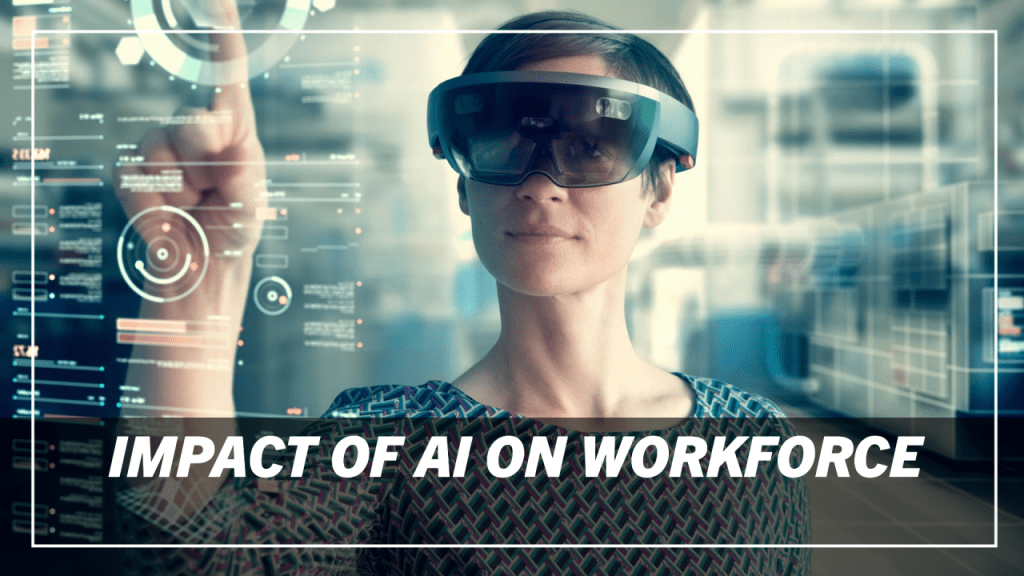
I was born in a rural farming community in India, where most people tilled the soil with animals and cut the crops with sickles. This is where I first witnessed the power of technology – the tractor. The yield soared and the productivity increased many folds. But on the darker side, I also witnessed the disparity gap it created between those who could afford a tractor and those who could not, and an even bigger impact on the labor that worked at the farms. This story played out over and over every time a new form of technology emerged. Just as Internet changed the consumer behavior and companies had to adapt, AI is going to change how work gets done and employees will have to adapt. So, in assessing how AI will impact the workforce, a look back into the past can give us a glimpse into the future.
Innovation is a uniquely human trait. All the tools and technologies we have developed are the result of that innovation spirit. Technology reduces the cost of products and services which allows more people to enjoy creature comforts and live longer. Advances in technology are good for society at large, but it always displaces some work and impacts the lives of those whose work is replaced by technology. Tractors helped produced the much-needed food to support our growing population and Mills clothed more people, but they also disrupted lives of many farm workers and weavers.
Just as today we cannot imagine a world without these mechanized farming technologies, in future we will not be able to imagine a world without Artificial Intelligence. AI is just another automation tool. AI is not going to replace humans, but just like every other automation tool, AI is going to automate many of tasks we manually. Just like one person sitting atop a tractor can plow more than hundred, AI will enable companies to do more with less people. It will eliminate some jobs, but it will also create many new jobs. Who would have thought in the year 2000 that there will jobs like “Influencer Marketer” or “Search Engine Optimizer” or “Data Modeler?”
I do not anticipate an overnight shift to “everything AI,” but the shift is already happening. How fast this change is coming – no one knows. This article is my advice on how to prepare for this fast-approaching future, and how to survive and thrive in this ever-changing environment.
Ensuring Future Employment:
- Develop Mental Resilience: The impact of AI is going to be widespread, and it is going to accelerate the pace of change faster than ever. Consequently, the tools and processes used in an organization are also going to change rapidly demanding the need to adapt and change quickly. The metal resilience to keep up with this constant flux is going to be crucial to survive in this ever-changing environment. Stress management is going to be ever more important.
- Embrace Lifelong Learning: The pace of technological change means that the skills required today may become obsolete tomorrow. You need to commit to lifelong learning to stay relevant. This could involve pursuing formal education, attending workshops, obtaining certifications, or engaging in self-directed learning.
- Develop Technical Skills: While not everyone needs to become a data scientist, having a basic understanding of AI, data analytics, and digital tools can be a significant advantage. Familiarity with programming languages, data analysis, and AI-driven platforms will be highly coveted, but so will be need of those who understand business and are comfortable learning new tools, reimagining business processes and integrating AI into daily work.
- Cultivate Soft Skills: As AI handles more technical tasks, human-centric skills like communication, leadership, empathy, and adaptability will become even more crucial. These skills are difficult for AI to replicate and will be essential in roles that involve managing people, collaborating across teams, and fostering innovation.
- Focus on Creativity and Innovation: AI is good at digesting existing information, it can process vast amounts of data and perform complex logical tasks with precision, but it struggles with creativity and original thinking. Humans are exceptionally good at associational thinking and can create novel things, so those who can think outside the box, generate new ideas, and innovate will be highly valued in the future workforce.
A Glimpse into the Next Two Decades
I am not Yuval Harari, but I do read a lot. Based on my study of the past, here are my predictions for the future of work:
- Increased Human-AI Collaboration: AI is a tool, and it will be widely deployed across all organizations. Today most of these tools are behind the scenes, for example spam filters and security monitoring tools, but soon they will be embedded into every task. There will be lot more collaboration between humans and AI. Employees will work alongside AI systems, using them as tools to enhance productivity and decision-making.
- New Job Ecosystems: As AI automates some roles, new job ecosystems will emerge. There will be a greater emphasis on roles that involve managing, interpreting, and leveraging AI technologies. Additionally, industries such as AI ethics, cybersecurity, and AI-based creative fields will grow. A video gamer proficient at managing the game controller can operate cranes, planes, drones, and many other machines more effectively.
- BizTech Roles: Job roles will become more hybrid, blending technical and non-technical skills. For example, a marketing professional might need to understand AI-driven analytics to craft data-informed strategies. Similarly, a healthcare worker might use AI tools for diagnosis and treatment planning. A surgical assistant who helps the doctor perform precision surgery.
- Ethical and Regulatory Focus: As AI becomes more integrated into society, there will be a greater focus on the ethical implications and regulatory frameworks surrounding AI use. This will create opportunities for professionals in law, humanities, and public policy to shape how AI is deployed, as well as preventing the misuse of technology.
- Global Talent Markets: The rise of remote work and digital platforms will create a global talent market, where employees can work for companies anywhere in the world. This will increase competition but also provide more opportunities for those with the right skills.
- Continuous Skill Evolution: Gone are the days when you graduated in one field and happy retired employing what you learned in college. The new age calls for continuous learning, willingness to adapt and problem-solving aptitude. Employees possessing these skills will be more in demand and will be able to easily transition from one industry to another.
AI will change how we work and what we work on. It will present challenges for some, and it will offer opportunities for those who are willing to adapt and grow. The next two decades will be defined by this dynamic interplay between human creativity and AI innovation.
Please share your thoughts on what AI enabled changes you foresee coming, what the future of work may look like, and what is your advice to thrive in this future state.

 Jag Randhawa
Please Leave a Comment